
The Kitchen Table: Real Estate Planning for Canadian Families
EDITORIAL LIVING · ON PROPERTY · PIECE 01
The Kitchen Table
How thoughtful Canadian families talk about the house, early.
______________________________________________________________________
A few weeks ago, I sat across from a client who is forty-one. Her mother is seventy-three. The house in Burnaby, the one her mother has lived in since 1987, is now worth somewhere around $1.9 million.
They both know this.
Neither of them talks about it.
Not directly, anyway.
They talk about the garden. They talk about the neighbour who took down the cedar hedge. They talk about the stairs being steeper than they used to be, though no one says it that way. They talk about the cost of groceries, the property tax notice, the furnace that may need replacing before winter.
But they do not talk about the house.
They do not talk about whether her mother wants to stay there forever. They do not talk about what happens if she cannot. They do not talk about whether the home should be sold, kept, transferred, renovated, rented, or simply left alone until a decision is forced.
My client told me she had promised herself, three times, that she would bring it up at the next family dinner.
She would not bring it up.
She would help with the dishes, drive home, and lie in the dark wondering what happens to all of it when her mother can no longer climb the stairs.
The Question Every Family Eventually Faces
The question she was not asking out loud, the question the children of every Canadian homeowner over sixty-five are often not asking out loud, is this:
What is supposed to happen to the house, and what is my role in it?
The conversation does not need to be hard.
It needs to be early.
Why Early Real Estate Planning Matters
Most Canadian families wait until the house becomes a problem.
A fall.
A hospital stay.
A sudden move into care.
A parent who can no longer manage the yard, the stairs, the bills, the deferred maintenance, the quiet burden of a property that was once a home and has slowly become too much.
By then, the tone of the conversation has changed.
It is no longer, “What would you like?”
It is, “What can we do?”
It is no longer reflective. It is logistical.
Who has power of attorney? Who has access to the bank accounts? Who knows where the insurance papers are? Who is calling the realtor? Who is calling the accountant? Who is calling the lawyer? Who is telling the siblings?
This is when families make expensive decisions.
Not because they are careless.
Because they are under pressure.
And real estate decisions made under pressure are rarely clean.
The Financial Weight of the Family Home
A house bought in 1987 for $180,000 and worth $1.9 million today carries an unrealized gain of approximately $1.72 million. In Canada, that number matters. It matters because the Principal Residence Exemption is one of the most significant tax rules in the country for families who own a home.
Handled properly, a family may pay no tax on that gain.
Handled carelessly, or too late, the outcome can become more complicated than anyone expected.
This is not meant to scare anyone. It is meant to locate the issue.
The house is not only sentimental.
It is also financial.
It is often the largest asset in the family. It may be the thing that pays for care. It may be the thing that creates fairness between siblings. It may be the thing that carries memory, identity, grief, guilt, resentment, duty, and love.
That is why the conversation is so hard to begin.
No one wants to sound greedy.
No one wants to imply that a parent is old.
No one wants to make the home feel like a transaction before it has stopped being a home.
So everyone waits.
The parent waits because they do not want to burden the children.
The children wait because they do not want to offend the parent.
The siblings wait because no one wants to be the first one to say what everyone is already thinking.
And the house sits quietly in the middle of the family, accumulating value, maintenance, tax consequences, and unspoken meaning.
Start With the Conversation, Not the Sale
The first conversation should not be about selling.
That is the mistake.
Most adult children think the only way to bring up the house is to ask, “Are you going to sell?”
Of course that question lands badly.
It makes the parent feel moved out before they have chosen to move.
It makes the child sound like they are counting equity.
It turns a life into a spreadsheet.
The better conversation begins before there is a decision to make.
It begins with three small questions.
What does the house mean to you?
What would you like to happen to it, in a perfect world?
Who is the right person to help us think this through?
That is it.
Not a spreadsheet.
Not a demand.
Not a family meeting with everyone present and someone taking notes as though the home is already an estate file.
Twenty minutes.
One parent at a time, if possible.
The kitchen, mid-afternoon.
Coffee helps.
Not a restaurant. A restaurant makes everyone perform.
Not a phone call. Phone calls make silence feel like failure.
Not a holiday dinner. Holiday dinners already carry too much.
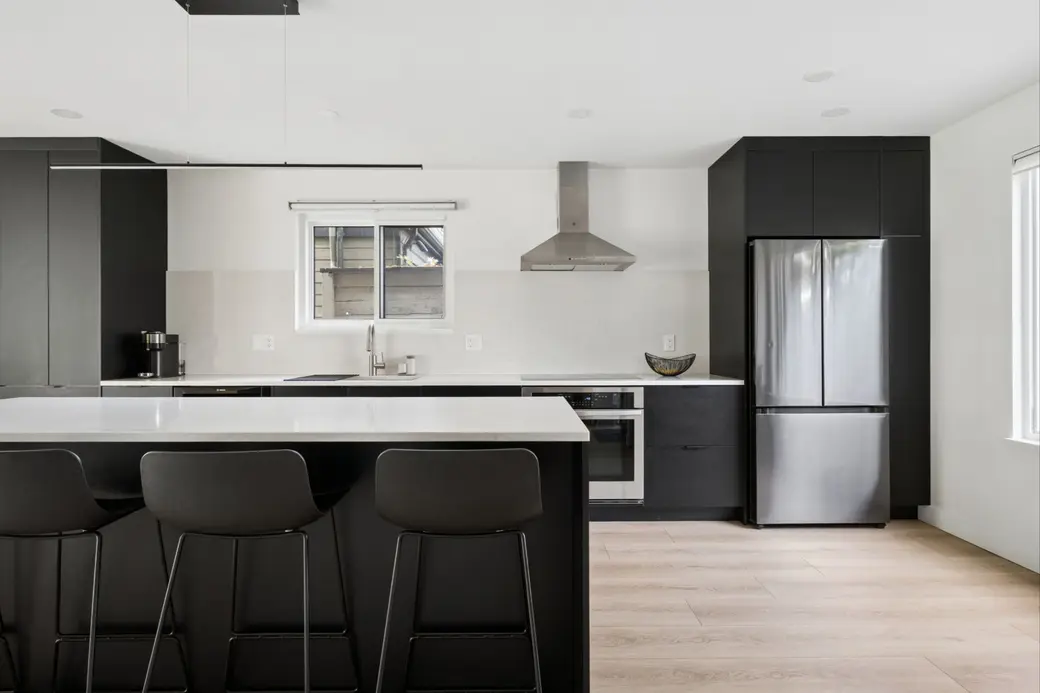
The kitchen is better because the kitchen has a way of softening the subject. It is where the parent still feels like themselves. It is where the house is not abstract. It is where the tiles, the mugs, the old calendar, the drawer that sticks, the chair with the worn leg, and the view into the yard can all sit inside the conversation without needing to be explained.
Start with this:
I’ve been thinking about the house lately, and I realized I don’t actually know what you’d want to happen with it. Can you tell me?
Then stop talking.
This is the part most people ruin.
They fill the silence.
They explain why they are asking. They over-soften. They apologize. They say they do not mean anything by it. They rush to reassure. They make it strange because they are afraid of making it strange.
Do not do that.
Ask the question and let your parent answer.
The first answer may not be clear.
It may be practical.
I don’t know.
It depends.
I’m not going anywhere.
You kids can figure it out.
I don’t want to talk about that.
None of those answers are failures.
They are information.
They tell you where the emotional edge is. They tell you what the parent is protecting. They tell you whether this is a conversation about independence, money, fairness, grief, control, memory, or fear.
The first conversation rarely ends in a plan.
It ends in permission.
Permission to think about it together.
Permission to bring in a professional.
Permission to have the second conversation in a few months.
That is the realistic deliverable.
Not a decision.
An opening.
From there, the practical questions become easier.
Is the home still suitable?
Is there deferred maintenance that would affect a future sale?
Is the property title straightforward?
Is there a mortgage or line of credit registered against it?
Has anyone been added to title?
Are there multiple properties in the family?
Has the parent lived in the home continuously?
Could there be a period where the home is vacant, rented, or no longer their principal residence?
Has anyone spoken with an accountant before making assumptions about tax?
These questions matter because the quiet mistakes are rarely dramatic.
They look reasonable when they happen.
An adult child is added to title “just to make things easier.”
A parent moves into long-term care and the house sits for years while no one decides what to do.
A family owns more than one property and assumes the exemption will work itself out.
A sibling wants to keep the home but no one has calculated what that actually means for the others.
None of this is hidden. The CRA publishes the rules. The issue is that most families do not know when to look.
They look after the decision.
They should look before.
The goal is not to turn every family conversation into tax planning.
The goal is to understand that the home sits at the intersection of emotion, law, tax, care, and timing.
A thoughtful family does not need to have all the answers at the kitchen table.
They need to know which questions deserve professional eyes before they become urgent.
That may mean a tax accountant.
It may mean an estate lawyer.
It may mean a financial planner.
It may mean a real estate advisor who understands not only what the home could sell for, but what it is holding for the family.
A Thoughtful Plan Is Not Always a Listing
Because sometimes the best answer is not to sell.
Sometimes it is to stay and modify the home.
Sometimes it is to sell earlier, while the parent can still choose the next chapter with dignity.
Sometimes it is to rent.
Sometimes it is to transfer nothing and simply prepare.
Sometimes it is to make peace with the fact that the children do not want the house, even if the parent imagined they would.
Sometimes it is to acknowledge that the property is both an asset and an archive.
The height marks on the doorframe.
The basement freezer.
The cabinet no one has organized since 2004.
The dining room table that only gets opened at Thanksgiving.
The garden someone still calls Dad’s garden, even though Dad has been gone for eight years.
This is why the conversation cannot be reduced to market value.
But market value cannot be ignored either.
That is the tension.
A home can be sacred and still require a plan.
A parent can be independent and still need support.
A child can be loving and still need clarity.
A family can be close and still be undone by assumptions.
The kitchen table is where the first assumption gets named.
Not solved.
Named.
We have never talked about what you want.
That sentence alone can change the next ten years.
It can prevent a rushed listing.
It can prevent a sibling fight.
It can prevent a tax surprise.
It can prevent the quiet panic of trying to make irreversible decisions from a hospital hallway.
It can also give a parent something many families accidentally take away from them: authorship.
The chance to say what matters.
The chance to say what they fear.
The chance to say what they do not want.
The chance to participate before everyone else starts deciding around them.
If your family has not had this conversation yet, you are not behind.
Most have not.
You are just early.
Which is exactly where you want to be.
Start with twenty minutes.
Start before there is a crisis.
Start without a spreadsheet.
Start at the kitchen table.
If you would like a private read on your own situation, we are here.
Recent Posts